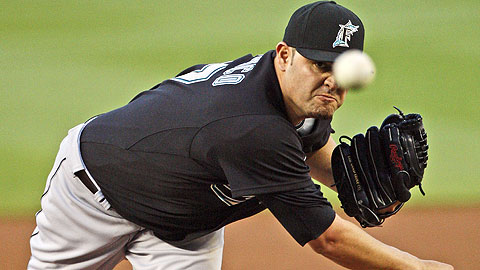
Raul the real deal

Normal
0

false
false
false

EN-US
X-NONE
X-NONE

MicrosoftInternetExplorer4

/* Style Definitions */
table.MsoNormalTable
{mso-style-name:”Table Normal”;
mso-tstyle-rowband-size:0;
mso-tstyle-colband-size:0;
mso-style-noshow:yes;
mso-style-priority:99;
mso-style-qformat:yes;
mso-style-parent:””;
mso-padding-alt:0in 5.4pt 0in 5.4pt;
mso-para-margin-top:0in;
mso-para-margin-right:0in;
mso-para-margin-bottom:10.0pt;
mso-para-margin-left:0in;
line-height:115%;
mso-pagination:widow-orphan;
font-size:11.0pt;
font-family:”Calibri”,”sans-serif”;
mso-ascii-font-family:Calibri;
mso-ascii-theme-font:minor-latin;
mso-hansi-font-family:Calibri;
mso-hansi-theme-font:minor-latin;}
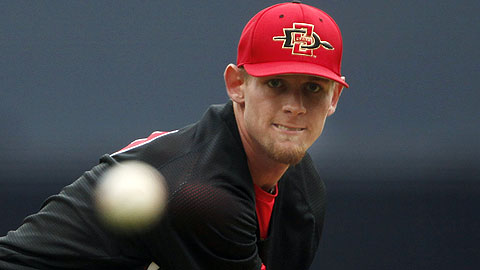

AP090602035298.jpg

Will Raul Ibanez ever slow down?


No, really -- will he?


Here we are, on the cusp of summer, and
the Phillies left fielder already has 21 homers, 58 RBIs and 49 runs scored.
And a .322 average. And a .674 slugging percentage.


This, after another heroic day at the
plate Thursday, in which he not only extended his hit streak to a Major
League-leading 11 games, but did so by single-handedly defeating the Mets at
Citi Field in extra innings with a game-winning, three-run homer.


Did I mention he's 37 years old?


Yes, 37 years old -- one year older than
Michael Jordan was when he walked away from the Bulls.


For that reason alone, the assumption is
that Ibanez's MVP-caliber pace will only last so long before he begins to act
his age.


Because that's what typical 37-year-olds
do. They slow down. They get sent to the DL. They relax with family.


Then again, typical 37-year-olds don't
keep a hyperbaric chamber in their home and work out all six months of the
offseason and on off-days during the regular season.


Whatever he's done, it's worked. Ibanez
been proving doubters wrong his entire career, from when he caught on in Kansas
City at age 30 to his second time around with Seattle, where he established
himself as one of the AL's most reliable run producers.

Normal
0

false
false
false

EN-US
X-NONE
X-NONE

MicrosoftInternetExplorer4

/* Style Definitions */
table.MsoNormalTable
{mso-style-name:”Table Normal”;
mso-tstyle-rowband-size:0;
mso-tstyle-colband-size:0;
mso-style-noshow:yes;
mso-style-priority:99;
mso-style-qformat:yes;
mso-style-parent:””;
mso-padding-alt:0in 5.4pt 0in 5.4pt;
mso-para-margin-top:0in;
mso-para-margin-right:0in;
mso-para-margin-bottom:10.0pt;
mso-para-margin-left:0in;
line-height:115%;
mso-pagination:widow-orphan;
font-size:11.0pt;
font-family:”Calibri”,”sans-serif”;
mso-ascii-font-family:Calibri;
mso-ascii-theme-font:minor-latin;
mso-hansi-font-family:Calibri;
mso-hansi-theme-font:minor-latin;}
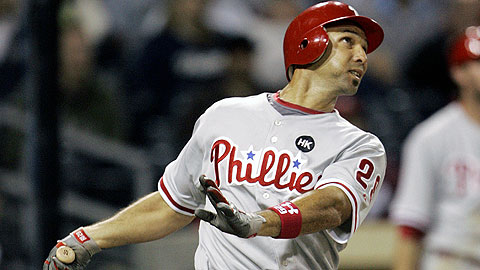
The decision to leave behind Seattle's
vast home park -- SAFECO Field -- for Philadelphia's cozy hitters' park --
Citizens Bank Park -- is also paying major dividends. Ibanez sports a beastly
.688 slugging percentage at home this season, evidence of Citizens Bank's
predictable effect on a lefty slugger. The veteran has benefitted from more
than merely a change of location, though, as his .321 average and absurd .714
slugging percentage against left-handed pitchers reflect the work of a hitter
who has gone great lengths to improve his approach.


The numbers should slow down some, but a
run at 40 homers is no fantasy.


--
Alex Cushing, MLB.com

Opportunity knocks for Aardsma

AP090606019603.jpg

The
big headlines from Wednesday include Justin Verlander‘s seventh straight win,
Gil Meche‘s 11-strikeout gem in Cleveland and Carlos Quentin‘s recovery
timetable being pushed back until after the All-Star break.

But
the most useful piece of news came from Seattle, with word that Brandon Morrow
would be moved back to the rotation roughly three months after the team decided
to shift him back to the bullpen.

Why
is this important?

The
announcement signals the club’s growing confidence in David Aardsma, a
little-known journeyman right-hander acquired from Boston this past offseason
for a bag of Cracker Jacks.

With
Morrow no longer lurking in the shadows, Aardsma is the clear-cut closer in
Seattle, not just the guy whose name appears first during roll call.

That’s
great news for owners who were lucky enough to scoop him up a few weeks ago.
Saves are saves, and Aardsma deserves the chance. The guy owns a 1.84 ERA,
having converted all but one of his 11 save opportunities this season.

Still,
winning a closer job and keeping it are two different things.

While
Aardsma has both the imposing mound presence and the heavy fastball required of
good firemen, he’s yet to erase the control problems that have hampered him
throughout his five-year career.

Sure,
you can argue that he strikes guys out (9.85 K/9 rate) and limits hits (.175
AVG against), but the righty’s strikingly high 6.5 BB/9 rate is cause for
legitimate concern. Sooner or later, the ball will start falling in more
frequently, as is made clear by his .247 batting average against on balls in
play. And when that happens, it’s only a matter of time before Aardsma’s back
in middle relief like so many past flavor-of-the-month closers.

If
you’ve held onto Aardsma for this long, now is the time to cash in your chips.
This is as good as it gets.

Other
tidbits …

Francisco Liriano‘s
ERA fell below 6.00 for the first time in weeks Wednesday, as he struck out
seven Oakland hitters and walked two en route to his second consecutive quality
start.  A buy-low opportunity could be
brewing here, as his next start comes against the powerless Pirates.

Dissecting Strasburg

Normal
0

false
false
false

EN-US
X-NONE
X-NONE

MicrosoftInternetExplorer4

/* Style Definitions */
table.MsoNormalTable
{mso-style-name:”Table Normal”;
mso-tstyle-rowband-size:0;
mso-tstyle-colband-size:0;
mso-style-noshow:yes;
mso-style-priority:99;
mso-style-qformat:yes;
mso-style-parent:””;
mso-padding-alt:0in 5.4pt 0in 5.4pt;
mso-para-margin-top:0in;
mso-para-margin-right:0in;
mso-para-margin-bottom:10.0pt;
mso-para-margin-left:0in;
line-height:115%;
mso-pagination:widow-orphan;
font-size:11.0pt;
font-family:”Calibri”,”sans-serif”;
mso-ascii-font-family:Calibri;
mso-ascii-theme-font:minor-latin;
mso-hansi-font-family:Calibri;
mso-hansi-theme-font:minor-latin;}

AP090405054645.jpg

Normal
0

false
false
false

EN-US
X-NONE
X-NONE

MicrosoftInternetExplorer4

/* Style Definitions */
table.MsoNormalTable
{mso-style-name:”Table Normal”;
mso-tstyle-rowband-size:0;
mso-tstyle-colband-size:0;
mso-style-noshow:yes;
mso-style-priority:99;
mso-style-qformat:yes;
mso-style-parent:””;
mso-padding-alt:0in 5.4pt 0in 5.4pt;
mso-para-margin-top:0in;
mso-para-margin-right:0in;
mso-para-margin-bottom:10.0pt;
mso-para-margin-left:0in;
line-height:115%;
mso-pagination:widow-orphan;
font-size:11.0pt;
font-family:”Calibri”,”sans-serif”;
mso-ascii-font-family:Calibri;
mso-ascii-theme-font:minor-latin;
mso-hansi-font-family:Calibri;
mso-hansi-theme-font:minor-latin;}

Last week, SI raised
the question of whether Bryce Harper was the Lebron James of baseball.


The same comparison
has been made to Stephen Strasburg.


Is Strasburg truly
the Next Big Thing?


Can he
“save” the Nationals franchise?


Is it worth stashing
him away in fantasy?

Welcome
to the Stephen Strasburg Show, a true story about a San Diego State
right-hander who became the most hyped Draft pick in modern baseball history.

The
series got underway Tuesday, when Washington did the inevitable by selecting
Strasburg first overall in the 2009 Draft.

Now,
the drama begins.

Scott
Boras, his "adviser" (non-legal term for agent), is demanding a contract in the
neighborhood of six years and $50 million, unprecedented for an amateur player.
The sooner both parties shake hands, the sooner we'll see Strasburg in a
Nationals uniform.

Even
if negotiations go down to the Aug 17. deadline, there's still a chance he
reaches D.C. by September.

Or
who knows? Maybe even sooner. Maybe Strasburg bypasses the Minors entirely and
goes right into the Nationals rotation.

It's
happened before.

Twenty
draft picks have advanced directly to the Major Leagues without playing in the
Minors. A good chunk of them came in the '70s. The most recent example was
Xavier Nady in 2000. 

Granted,
Nady spent the next three years in the Padres farm system working his way back.
The Nationals may ultimately decide that the risk of rushing their franchise
face just to pitch a few meaningless games (and satisfy a few fantasy geeks)
isn't worth the reward.

Which
means that unless some agreement gets squared away before August -- an unlikely
event, given the typical pace of Boras negotiations -- it's probably best to
leave Strasburg on the waiver wire in standard, one-year mixed leagues.

Keeper
leagues are a whole 'nother ballgame, though. Strasburg is clearly a giant name
when it comes to future fantasy planning, but it's worth taking history into
consideration before assigning him any long-term value.

The
track record for pitchers drafted first overall doesn't exactly bode well for
Strasburg's Hall of Fame aspirations. The No. 1 pitcher club includes:

Year  
Player                   
Team

2007  David
Price           Tampa Bay


2006  Luke
Hochevar     Kansas City

2002  Bryan Bullington   
Pittsburgh

1997  Matt
Anderson      Detroit

1996  Kris
Benson          Pittsburgh


1994  Paul
Wilson           New York (N)


1991  Brien
Taylor          New York (A)


1989  Ben
McDonald      Baltimore

1988  Andy
Benes          San Diego


1983  Tim
Belcher          Minnesota


1981  Mike
Moore          Seattle


1976  Floyd
Bannister     Houston

1973  David
Clyde          Texas

It's
safe to say Bullington, Anderson, Wilson, Benson, Taylor and Clyde all wound up
being major disappointments. And since Price and Hochevar are just now getting
their feet wet, it's also safe to say that not a single No. 1 pitcher in the
last 20 years has come close to expectations. Not one.

Does
that mean Strasburg, by virtue of his membership, is destined to fall short of
expectations? No. Each pitcher handles pressure differently, as they do on the
mound.

Still,
it's not a great sign.


The best Strasburg comparison might very
well be a No. 2 pick overall -- namely, right-hander Mark Prior. Were it not
for Minnesota's pursuit of hometown hero Joe Mauer, the former Cubs hurler
surely would have been taken first. Prior starred at USC, and his arrival was
highly anticipated at Wrigley Field, just as Strasburg's debut will undoubtedly
stir up all sorts of excitement in the nation's capital. Strasburg soon turns
21, the same age Prior was upon making his big league debut. Both share roughly
the same height and weight.

Most
importantly, both were believed to have flawless mechanics entering Draft day.

But
as Cubs fans and one-time Cubs skipper Dusty Baker learned later, there is no
such thing as flawless mechanics. Injuries would wind up transforming Prior
from one of the game's promising young starters into a shell of his former
self.

Clearly,
Prior's downfall and the history of No. 1 picks serve as cautionary tales.
While nobody will dispute Strasburg's poise and immense potential, the fact is
that he's a pitcher.

Lebron dribbles,
passes, shoots, blocks and rebounds for a living.


If he violently threw a ball at
full speed several dozen times each week, he wouldn’t be Lebron James.

— 

Normal
0

false
false
false

EN-US
X-NONE
X-NONE

MicrosoftInternetExplorer4

/* Style Definitions */
table.MsoNormalTable
{mso-style-name:”Table Normal”;
mso-tstyle-rowband-size:0;
mso-tstyle-colband-size:0;
mso-style-noshow:yes;
mso-style-priority:99;
mso-style-qformat:yes;
mso-style-parent:””;
mso-padding-alt:0in 5.4pt 0in 5.4pt;
mso-para-margin-top:0in;
mso-para-margin-right:0in;
mso-para-margin-bottom:10.0pt;
mso-para-margin-left:0in;
line-height:115%;
mso-pagination:widow-orphan;
font-size:11.0pt;
font-family:”Calibri”,”sans-serif”;
mso-ascii-font-family:Calibri;
mso-ascii-theme-font:minor-latin;
mso-hansi-font-family:Calibri;
mso-hansi-theme-font:minor-latin;}

Alex Cushing,
MLB.com

Normal
0

false
false
false

EN-US
X-NONE
X-NONE

MicrosoftInternetExplorer4

/* Style Definitions */
table.MsoNormalTable
{mso-style-name:”Table Normal”;
mso-tstyle-rowband-size:0;
mso-tstyle-colband-size:0;
mso-style-noshow:yes;
mso-style-priority:99;
mso-style-qformat:yes;
mso-style-parent:””;
mso-padding-alt:0in 5.4pt 0in 5.4pt;
mso-para-margin-top:0in;
mso-para-margin-right:0in;
mso-para-margin-bottom:10.0pt;
mso-para-margin-left:0in;
line-height:115%;
mso-pagination:widow-orphan;
font-size:11.0pt;
font-family:”Calibri”,”sans-serif”;
mso-ascii-font-family:Calibri;
mso-ascii-theme-font:minor-latin;
mso-hansi-font-family:Calibri;
mso-hansi-theme-font:minor-latin;}


Lidge lands on DL

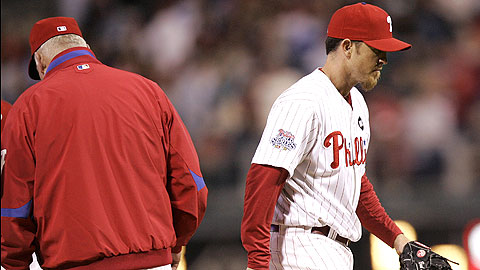
AP090418026044.jpgNews just broke that closer Brad Lidge hit the 15-day disabled list because of a sprained knee — hardly a surprise, given the way Lidge has pitched lately.

The big righty heads to the DL sporting an ugly 7.27 ERA, six blown saves and, even more alarming, a 1.81 WHIP — this, after converting all 41 save opportunities last year and reemerging as one of the game’s top ninth-inning guys.

An 0-3 record? Fourteen walks and seven homers allowed in 26 innings? The writing was on the wall.

There’s no word yet on Lidge’s timetable, but as for replacements, it would be pretty surprising if Ryan Madson doesn’t see the majority of save opps in the interim. And unlike C.J. Wilson or other middling, right-place-right-time relievers, Madson deservedly brings a reputation as one of the game’s top setup men to the fireman spot. Need another reason to drop what you’re doing and go get Madson?

If Madson is gone, take a long look at Andrew Bailey and Tony Pena.

Chad Qualls, Arizona’s closer all season, has struggled not just throwing strikes lately but staying on the field, confessing Sunday that his forearm injury could linger. That opens the door for Pena.

Manager Bob Geren hasn’t spelled out the pecking order in Oakland’s bullpen, but it’s fairly obvious who he prefers in the ninth. Bailey notched his second save in as many days and his third of the week Monday. And opportunities aside, the guy is just fun to own, as he quickly blossomed into a star reliever and a dark-horse AL Rookie of the Year candidate, not unlike the guy he’s replacing, Brad Ziegler.

— Alex Cushing, MLB.com

Hamilton out 4-6 weeks

Though some
Rangers officials feared worse, it’s still another big blow to owners who pinned their title hopes on Hamilton sustaining last year’s feel-good story.

Sure, hindsight is 20-20,
but this reminds us about the dangers of getting carried away by one big year. No matter what anyone told you about Hamilton before the season, the
reality is that nobody really knew how 2009 would play out. How many modern-day ballplayers became superstars after having just
40 at-bats above Class A before making it to The Show.

And injuries are
nothing new.  Remember, the year before he
arrived in Texas, he struggled to stay healthy in Cincinnati, playing only 90
games due to numerous nicks and bruises.

The Reds went on to trade Hamilton to the Rangers for Edinson Volquez, and both
players emerged as All-Stars in new surroundings. Now, neither of them can avoid the trainer’s room.

One potential
positive from Hamilton’s injury is the opportunity it creates for Andruw Jones,
who has shown glimmers of his former self in Texas, posting a .533 slugging
percentage thanks to an adjusted batting stance and improved plate discipline. Granted, he’ll have to battle David Murphy, Marlon Byrd and Hank Blalock for playing time, but there should be plenty of plate appearances to go around given the righty-lefty breakdown. Plus, the Rangers are contenders now, so if Murphy can’t do better than a .708 OPS, they won’t hesitate to bench him in favor of Jones. Texas is scheduled to
face four left-handed starters this week, so now is as good a time as any to give the right-handed-hitting Jones another chance.

— Alex Cushing, MLB.com

Spend it like Beckham?

beckham.jpgIn a matter of hours Wednesday, three of the game’s most prolific prospects — Andrew McCutchen, Gordon Beckham and Tommy Hanson — were all ticketed to the Majors.

All this created havoc for owners with limited roster space on such short notice.

Who should you grab first? Who should you drop? Where’s the computer?

Do you target McCutchen, the speedy 23-year-old center fielder who essentially made Nate McLouth expendable for Pittsburgh?

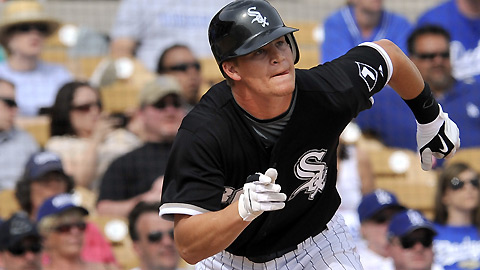
Or do you go for Beckham, the 22-year-old shortstop-turned-third baseman who shot through the White Sox system less than one year after being drafted?

And what about Hanson, who all but ended Tom Glavine’s career in Atlanta after completely dominating at Triple-A Gwinnett?

Strike that, actually. Given all the hype surrounding Hanson since earning Arizona Fall League Most Valuable Player honors, the chances of him just hanging around the free-agent pool are slim. And let’s be honest — Beckham and McCutchen, for all their talent, don’t hold a torch to Hanson in terms of immediate upside. If Matt Wieters is the one American League rookie to own this year, then Hanson is that guy in the National League, even after getting beat up by the Brewers in his big league debut.

The choice ultimately comes down to McCutchen and Beckham, both of whom weren’t expected to be promoted this early in the season.

The smart money says McCutchen. He’s got tons of speed, blossoming power, five years of Minor League seasoning and the guarantee of playing time now with McLouth patrolling center in Atlanta. Baseball America has been drooling over his physical attributes for years, and with 34 stolen bases last year and improved power with a career-high .496 slugging percentage this year, he’s backed up the hype for the most part.

Beckham carries more risk, largely because he just hasn’t been around for long. This time last year, the guy was leading the Georgia Bulldogs to an NCAA championship. Now, he has a real chance of supplanting Josh Fields at the hot corner, despite doubts held by his own manager, Ozzie Guillen, who told several outlets during Spring Training that the club would be “in trouble” if Beckham were in the Majors this season. With that in mind, it’s fair to wonder whether the White Sox rushed him at all.

But Minor League service time is just one thing to consider.

The fact that Beckham qualifies at shortstop, third and possibly even second soon can’t be dismissed. It’s enough of a reason to go back and comb through his Minor League record carefully, all 59 games worth of it.

Are Beckham’s impressive numbers — a .322 average and a .519 slugging percentage — enough to go on? According to someone who covers Minor League players, yes, double-digit homers aren’t out of the question for the Atlanta native, who already possesses considerably more pop than McCutchen, whose pedestrian .423 slugging percentage on the farm leaves much to be desired. The real concern, according to this source, wasn’t at the plate, but on the defensive end, where Beckham could struggle given his lack of experience at third.

That leads me to think the McCutchen vs. Beckham debate depends largely each owner’s immediate needs. If speed and outfield depth are weaknesses, then the exciting new Bucs center fielder is your man, no question. But, if you need help up the middle, going for the high-risk/high-reward guy in Beckham makes sense. Even more so in points leagues, where steals aren’t nearly as valuable as they are in standard 5×5 formats.

For those reasons, I actually wound up cutting McCutchen in a points league shortly after grabbing him to get a hold of Beckham.
 
Regardless of whom you choose, one thing is clear: both McCutchen and Beckham have impact potential and deserve all the attention they’re receiving.

In other news …

Is B.J. Upton finally rounding into form? He extended his hit streak to 10 Sunday and sports a .371 average over that span. A home run was even seen flying off his bat Thursday, his third.

Two days after Garrett Atkins seemingly snapped a season-long slump with two homers in one game, the red-hot Ian Stewart did the same thing, complicating the veteran’s chances of reclaiming full-time status at third base.

Another third-base situation worth watching is the one in Milwaukee, where Mat Gamel is getting more playing time at the expense of Bill Hall, whose struggles against right-handers are well documented.

Fausto Carmona’s sinker may not be sinking, but his stock sure hit rock bottom this week.

One Tribe member whose value isn’t sinking, ironically, is that of Carl Pavano, who looks more like the pitcher who helped lead the Marlins to the 2003 World Series championship than the primary subject of the boo-birds in the Bronx, having gone 7-1 with a 3.00 ERA and a 40/10 K/BB ratio since the start of May, including his first complete-game shutout in four years last time out.

Another pitcher who deserves a second chance is Jeff Niemann, who sports a scintillating 1.73 ERA and a 21/3 K/BB ratio in his past four starts after reportedly tweaking his mechanics a few weeks ago.

Ricky Nolasco embarked on his turnaround Sunday, getting recalled from Triple-A New Orleans after two effortless starts in which he notched a 2.40 ERA.

Oakland’s rookie starters, namely, Vin Mazzaro, Brett Anderson, Trevor Cahill and Josh Outman, seem to be figuring out how to handle Major League hitters after some tough lessons. In fact, the entire pitching staff owns a surprising 1.89 ERA this month.

As much as everyone wants to see Dontrelle Willis put last year behind him, he still hasn’t figured out the strike zone.

The same goes for Rich Hill, apparently.

B.J.’s younger brother, Justin Upton, on the other hand, has everything figured out at age 21. He’s pretty good; superstar-in-the-not-too-distant-future good.

— Alex Cushing, MLB.com
 

Rookie trio strikes chord

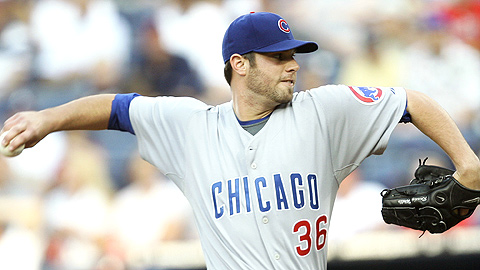
r_wells.jpgThree rookie starters — Randy Wells, Vin Mazzaro and Antonio Bastardo — all took giant steps forward Tuesday.

But unlike Mazzaro and Bastardo, who made their big league debuts, Wells continued to gain steam in his fifth start. The Cubs righty took a no-hitter into the seventh inning before surrendering a single to Chipper Jones.

The only downside was the Cubs bullpen letting his seven-inning gem go to waste, as the lead evaporated under the consistently inconsistent closer, Kevin Gregg, leaving Wells winless on the year, at 0-2. This, despite a Zack Greinke-esque stretch in which he’s notched a startling 1.69 era and a 27/7 K/BB ratio since being called up on May 8. In other words, the only thing keeping Wells from being owned everywhere right now are his teammates, something not lost on Cubs management. Word out of Chi-town is that Sean Marshall will be the odd man out once Rich Harden gets healthy — not Wells. So while the 26-year-old Illinois native may have arrived to the The Show late, his timing couldn’t be better, with the Cubs playing well below expectations and looking for all the help they can get. This might be your last chance to snatch up Wells, who is emerging as one of the season’s top surprise arms.

It came as no big surprise that Mazzaro — the third member of Oakland’s holy trinity of pitching prospects that includes Brett Anderson and Trevor Cahill — kicked off his Major League career with six scoreless innings against the White Sox. For one, the White Sox lineup was without their biggest bat in Carlos Quentin.  Second, the 22-year-old righty had little left to prove at Triple-A Sacramento, where he put together a 2.38 ERA in 56 2/3 innings, thanks to sound command (44/17 K/BB ratio) and a devastating sinker (2 HR allowed, 1.71 ground-out-to-air-out ratio).  Facing hitters in the upper Minors gives Mazzaro an edge over Anderson and Cahill, who have been forced to learn on the fly in Oakland’s patchwork rotation. Growing pains can be expected along the way, but another few outings like Tuesday could make him a popular waiver-wire target.

Bastardo belongs in the same boat, especially after passing his first test with flying colors by tossing six strong innings of one-run, five-strikeout ball against the Padres.  The Phillies rotation already had issues when Brett Myers was healthy. Now facing the possibility of losing him for the remainder of 2009, the club thinks Bastardo can jumpstart their scuffling staff, and for good reason.  The 23-year-old control artist was extremely effective across two Minor League levels this season, ringing up a 1.82 ERA and 51/10 K/BB ratio in 47 2/3 innings. Granted, a good chunk of that work came at Double-A Reading, so it remains to be seen whether his deceptive tricks will fly in Philly. Questions about his stamina also need to be answered. Still, Tuesday gives reason to believe Bastardo could be take the rotation spot and run with it.

— Alex Cushing, MLB.com

Wieters Mania

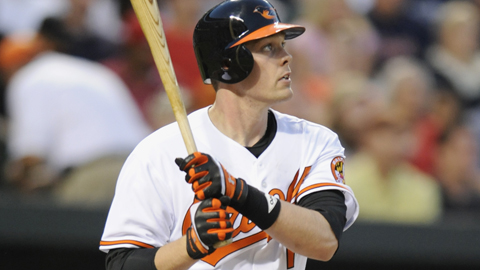
wieters.jpgIn case you missed it, the biggest thing since Cal Ripken swept through Baltimore this weekend.

Matt Wieters — the most highly anticipated Orioles prospect in two decades — hardly snuck in through the back door Friday. He got a standing ovation before stepping to the plate for his first big league at-bat.

One network later called it, “the dawn of the Matt Wieters era.”

One commentator even mentioned his name in the same sentence as Johnny Bench.

Now, before we begin to wrap our minds around that comparison, a little background:

Anyone following baseball closely over the past several months knew this moment would come. What Wieters brings to the table is practically unrivaled: six-foot-five, switch-hitter, catcher, starred at Georgia Tech, selected fifth overall in the 2007 First-Year Player Draft, bulleted through the Orioles farm system in less than two years time and a career .343 average and a .576 slugging percentage in the Minors. Not only is he talented, he also possesses something that separates him from the pack of freakishly gifted prospects: outstanding plate discipline.  Superstar is practically written all over this guy’s forehead.

But does his name really belong in the same sentence as Bench? Maybe we should roll out the carpet to Cooperstown now instead of waiting another however many years to induct Wieters into the Hall of Fame.

This whole situation raises an even larger question: When did we all start giving big-time rookies star treatment? Did it start with Lebron? A-Rod?

Regardless, it’s hard to ignore how many bright young stars have fallen victim to hype. What happened to Jeff Francoeur since gracing the cover of Sports Illustrated in 2005? Years after Alex Gordon and Jeremy Hermida were favored to win Rookie of the Year honors, and we’re still waiting for them to arrive.

The good news for Wieters is that history is working in his favor.  Only so many hitters have wrecked havoc on Minor League pitching over the last quarter-century quite like the South Carolina native. He also joins an up-and-coming Orioles lineup that is just hitting its stride.

So it really just comes down to a test of character. Will Wieters fold under the spotlight, seize the moment or stumble for a while before getting his act together?

Having watched him play a little bit, I will say that he seemed fairly calm under fire. He doubled and tripled on Saturday, and despite hitless performances on Friday and Sunday, the fact that he didn’t start swinging at everything in arm’s length shows signs of maturity.

Cynicism aside, in the face of some ridiculous expectations, Wieters can and I think, ultimately, will blossom into one of baseball’s top catchers, batting well above of.300 and rake 20-30 homers annually.

Just don’t go haywire if it takes longer than a week or two before he gets there.

— Alex Cushing, MLB.com

Mauer power here to stay?

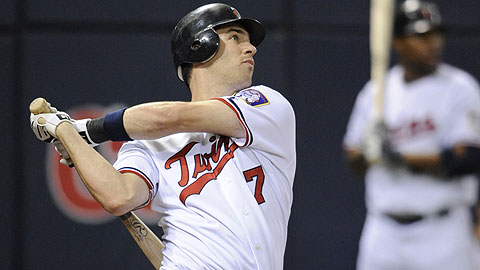
mauer.jpgWe all knew Joe Mauer could hit, but hit for power?

That was supposed to be the one crack in his armor.

Until this year.

Mauer slugged his 11th homer on Memorial Day, his third in as many days, putting him within two of his career high set back in 2006. The difference, of course, is that back then, Mauer had 512 at-bats before getting there. This time, it’s taken only 81 at-bats to reach 11. At this pace, he’ll finish the season with 66 bombs (assuming he plays in every remaining every Twins game), even after sitting out the entire month of April nursing a back injury. And who says back problems sap a hitter’s power? I remember hearing a similar prediction about Russell Branyan’s back woes, right before he proceeded to do his best Roy Hobbs impersonation. But that’s another story for another day.

With the way things are going now, people have to be wondering: what has gotten into Mauer? Is this some momentary surge or can we expect to see him competing against teammate and reigning Home Run Derby champ, Justin Morneau? Neither outcome would be shocking.

One thing’s for sure, though: Mauer is no Barry Bonds: The chances of him tallying 66 homers in one season are about as likely as Jamie Moyer striking out 300 batters. In fact, I have a hard time buying 30 homers.

One glance at his hit chart tells an interesting story:

The vast majority of Mauer’s homers have been opposite-field shots.

Don’t get me wrong — going the other way never hurt anyone. The bottom line is this, though: Mauer has always shown the ability to spray the ball all over the diamond, meaning his recent outburst is merely a more prolific version of what he’s done in past years. That’s not to say it’s impossible for a player to improve over time, but to witness such a dramatic shift without any real change to his skill set or approach makes it difficult to believe Mauer’s surge will last. If, for example, Mauer was all of a sudden pulling the ball to right field with great frequency, it would be far easier to defend his long-ball binge as legitimate. Unfortunately, no visible change exists where the 26-year-old’s peripherals or trends are concerned, so we’re left without much choice but to believe that he’s simply very, very hot right now — not a permanently changed hitter.
  

Another habit Mauer can’t seem to shake is pounding the ball into the dirt. Granted, this month has been better than years past. He is getting more loft on his swing, putting the ball in the air 36.6 percent of the time, more than eight percentage points higher than last season’s mark of 28.3 percent. Keeping it up will almost certainly get him to 20-25 homer territory. Still, to truly take the next step, to really establish himself as one of the game’s top hitters — and not just one of the game’s top-hitting catchers — he’ll probably need to stop waking up so many worms with his 46.5 percent ground-ball rate.

Winning another batting crown? Sure.

Banging 30-plus dingers after having never hit more than 13? Let’s not get carried away.

— Alex Cushing, MLB.com

Fish out of water?

nolasco.jpg
While a revitalized Michael Cuddyer was busy hitting for the cycle Friday, things went from bad to worse for one of last year’s biggest surprise stories.

Ricky Nolasco — the Marlins Opening Day starter — found himself assigned to Triple-A New Orleans after getting touched for eight earned runs in just two innings against the Rays.

It’s easy to see why the Marlins sent him packing. Friday was the last straw, his second straight eight-run meltdown, leaving him with an indefensible 9.07 ERA and 2-5 record.

Where did it all go wrong? What happened to the guy who returned last spring from a 10-month injury hiatus and went on to establish himself as one of the game’s top starters, notching 98 strikeouts, just 12 walks and a 3.29 ERA down the stretch?

How did Nolasco become the National League’s punching bag?

“What I’m seeing is it looks like he’s lost a little bit of belief in himself,” Marlins catcher John Baker said. “It looks like he’s pitching away from contact.”

Pitching coach Mark Wiley: “I think he was putting pressure on himself to do well. He was over-throwing pitches, and kind of losing a little bit of his mechanics.”

Manager Fredi Gonzalez: “We’ve got to get his confidence back.”

The notion that Nolasco’s problems are more mental than physical seems to be supported by the numbers.

For all the disappointment he’s caused for owners who believed they were drafting a staff ace, keep in mind that Nolasco’s basic skills remain intact: his mid-90s fastball, his 7.63 K/9 rate and his 37/13 K/BB ratio all paint a far different picture than the image of someone getting chased out of Florida.

That doesn’t mean Nolasco is without flaws. He threw way too many pitches (18.60 P/IP) and surrendered one too many homers (8 in 42 2/3 IP).

It just means that, barring some injury being concealed from everyone, there isn’t anything major wrong with him. Nothing that a confidence boost and a few mechanical adjustments can’t cure.

So before you go kicking him to the curb out of frustration, ask yourself this:

How would you feel if after giving up on Nolasco, he rejoined the Marlins rotation in no time and completely turned things around on someone else’s team?

– Alex Cushing, MLB.com